
Journal9 min read
Renovating an apartment in Tel Aviv: the complete guide
A guide to Tel Aviv apartment renovation: old buildings and towers, permits, the va'ad bayit, noise hours, order of works, contractors and budget.
By Coral Mesika — Interior designer, Coco Atelier
A Tel Aviv apartment renovation succeeds or fails before the first wall comes down. The building you live in (a 1930s Bauhaus walk-up or a new tower), the rules of its building committee, whether your works need a permit, and the order in which design decisions are made shape the cost and timeline more than any single material choice. Plan those, hire a contractor against proper drawings, keep a contingency, and the months of works become manageable. This guide follows the order you will meet them.
Old buildings and towers: two different renovations
Older buildings: Bauhaus, 1950s–70s blocks
The city's older stock, from the White City's Bauhaus buildings to the plastered blocks on pillars (kolonot) of later decades, offers high ceilings, cross ventilation and generous balconies. It also hides decades of small repairs.
- Plumbing. Old galvanised pipes and tired shared risers are common. Replacing your own pipes is standard; touching the shared vertical pipes involves the building.
- Electrics. Many older apartments run on a supply that cannot carry a modern kitchen, several air-conditioning units and an induction hob. Expect a new distribution board and often an upgraded connection.
- Walls and floors. Walls are rarely straight and floors are rarely level. Older floor tiles may sit on a thick bed of sand, which changes floor heights once removed.
- Damp. Ground-floor and top-floor apartments, and walls facing the sea, need a careful look at waterproofing and roof condition.
- Conservation. Some buildings in central Tel Aviv are listed for conservation, which can restrict what you change on the façade, windows and balconies.
Towers and newer buildings
In towers, structure, façade, windows and shared systems (shafts, sprinklers, sometimes central air conditioning) are fixed. A management company usually runs the building, with written renovation rules: working hours, lift booking, a deposit, and approval of your plans before work starts.
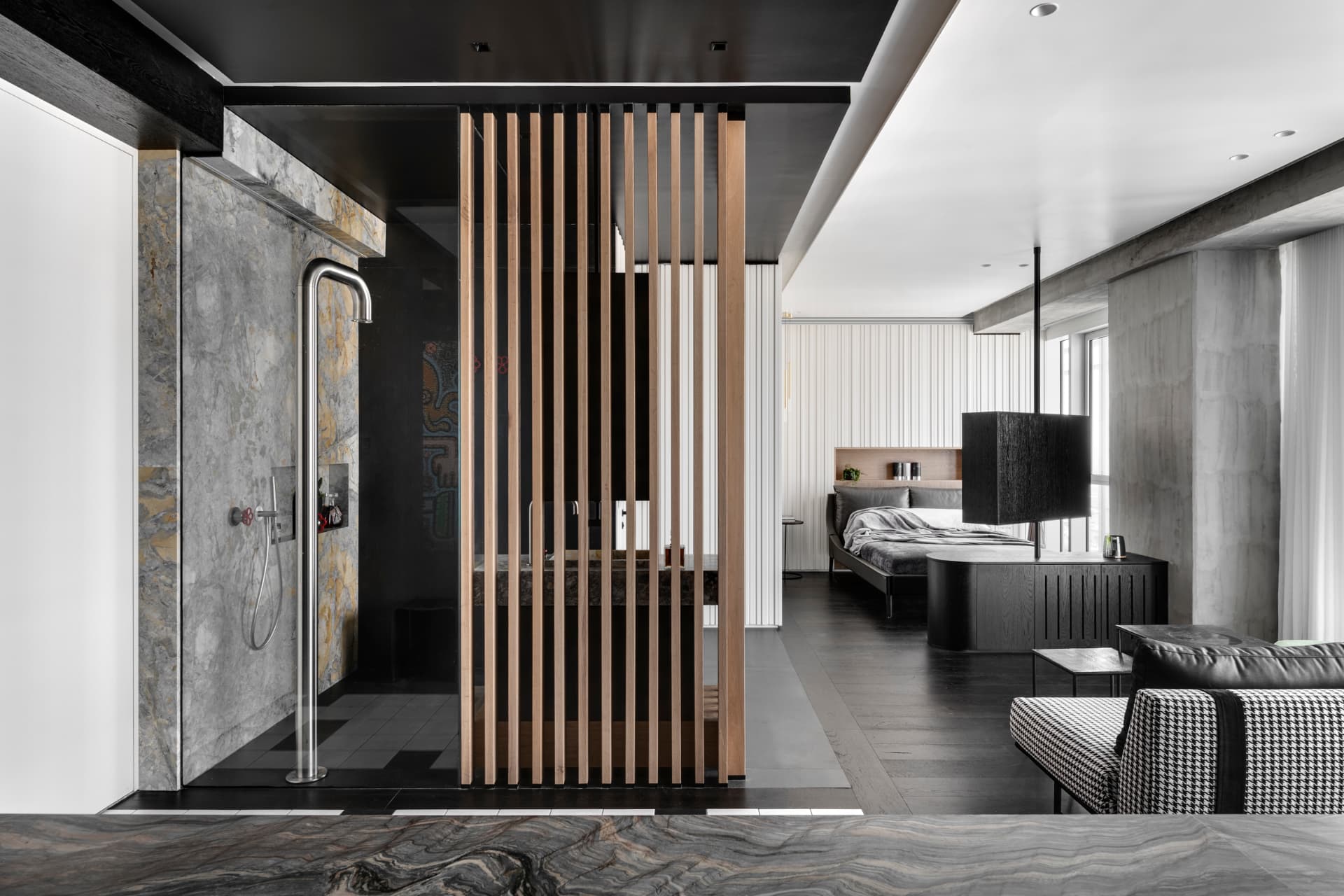
The upside is a cleaner starting point: straight walls, level slabs, modern risers. The design work goes into what a tower apartment usually lacks: character and storage. In XL APT, a 60 m² tower apartment featured in Portfolio magazine, the open plan is divided only by changes of material running from floor to ceiling, and custom millwork across the walls hides the storage.
The building committee (va'ad bayit) and your neighbours
In Israel, a renovation inside your apartment still lives inside a shared building. Before anything starts:
- Tell the va'ad bayit, in writing, with the dates and the scope. In towers this is formal: the management company will ask for drawings, insurance and a deposit.
- Check the condominium regulations (takanon). They may cover working hours, use of the lift, where debris can be stored, and changes to balconies or the façade.
- Protect the common areas. Lift interiors, stairwells and the entrance lobby should be covered by the contractor before the first bag of rubble goes down. Ask for this in the contract.
- Plan anything that touches shared property. Shared pipes, the roof, the façade, the electrical room and the parking all need the building's agreement, and some need a permit too.
- Talk to the neighbours directly. A note on the door with the dates, the noisy weeks and a phone number does more for goodwill than any regulation.
Do you need a permit to renovate in Tel Aviv?
For most interior renovations, no. Work that stays inside the apartment and does not touch the structure, the façade or shared systems (new kitchen, bathrooms, flooring, plaster partitions, electrics, plumbing within the apartment) is generally carried out without a building permit.
A permit, or at least a professional review, is usually needed once the works go further:
- Removing or cutting openings in load-bearing walls or columns
- Enclosing a balcony or otherwise adding built area
- Changes to the façade: new openings, different windows, shutters, air-conditioning units in visible places
- Work on shared property, such as the roof or common areas
- Conservation buildings, where even small exterior changes are regulated
- Merging or splitting apartments
Rules change and each building is different, so confirm with a local architect, engineer or lawyer whether your specific works need a permit before you commit to the design. Permit applications are normally prepared by a licensed architect or engineer; a good interior designer will flag early which parts of the plan need one.
A structural engineer's sign-off is wise for any change to walls whose role you are not certain of, permit or not. In older buildings, also ask whether the building is in an urban-renewal process (strengthening or redevelopment); it can change what is worth investing in.
Noise hours and working times
Israel regulates construction noise in residential buildings. As a general rule, noisy works are limited to weekday working hours, roughly from the morning until the early evening, with no noisy work on Shabbat or Jewish holidays and shorter hours on Fridays and holiday eves. Some municipalities and many buildings add an afternoon quiet break. Check the current hours with the Tel Aviv-Yafo municipality and your building before the works are scheduled.
In practice, the building's own rules are often stricter than the law, especially in towers. Write the agreed hours into your contract with the contractor so the responsibility for keeping them is theirs.
The stages of a renovation, in order
The order matters because each stage closes up the one before it. A typical full renovation of a Tel Aviv apartment runs roughly like this:
- Design and drawings. Layout, lighting and electrical plan, plumbing, air conditioning, kitchen and joinery, finishes. Order long-lead items now: kitchen, windows, sanitaryware, special tiles and stone.
- Demolition and stripping. Old floors, tiles, partitions, pipes and wiring come out. This is the noisiest stage and the one where hidden problems appear.
- Construction. New partitions in block or plasterboard, door openings, niches.
- Rough-in of services. Plumbing, drains, electrical conduits and boxes, data, and air-conditioning pipes and ducts. Everything that will be hidden goes in now.
- Waterproofing. Bathrooms, showers, balconies, tested before they are covered.
- Plaster and ceilings. Wall plaster, plasterboard ceilings and bulkheads for ducts and lighting.
- Flooring and tiling. Floors, wall tiles, thresholds.
- Joinery and kitchen. The kitchen and built-ins are measured on site after tiling, then made and installed.
- Fit-out. Sanitaryware, fittings, sockets and switches, light fixtures, internal doors, air-conditioning units.
- Painting and final cleaning, then a snag list walked together with the contractor and the designer.
Choosing a contractor
The contractor is the single biggest decision after the design itself.
- Ask for quotes against the same drawings and bill of quantities. It is the only way to compare like with like, and the best protection against "extras".
- Check registration and insurance. For larger works a registered contractor is required; in any case, ask for third-party and works insurance, which most va'ad bayit and towers will demand anyway.
- Visit a site in progress, not only finished photos. Tidy sites, protected floors and organised trades say a lot.
- Tie payments to milestones, not dates: after demolition, after rough-in, after tiling, on handover, with a final sum held until the snag list is done.
- Agree how changes are priced before works start. Changes on site are where budgets drift.
- Name the subcontractors. Know who will do electrics, plumbing, air conditioning and waterproofing, and who supervises them.
Budget and contingency
Set three numbers before you begin: the works, the fit-out (kitchen, joinery, sanitaryware, lighting), and furniture. Then add a contingency. General industry advice is to keep 10–15% of the works budget in reserve, more in older buildings where demolition is likely to reveal old pipes, uneven floors or damp.
Also budget for costs that are easy to forget: professional fees, permits where needed, the building's deposit, temporary rent, storage, and the weeks of overlap between paying rent and a mortgage.
Living elsewhere during the works
For a full renovation, moving out is almost always the right call. There will be weeks without water, electricity or a kitchen, and dust reaches everything. Living on site also slows the contractor down.
Look for a short-term rental with a flexible end date, since works often overrun, and put the furniture you are keeping into storage. If you will be abroad during the works, our guide to hiring an interior designer from abroad covers how that works.
Design decisions to make early
Some decisions cannot wait for the finishes. Make these before demolition:
- The layout, including door positions and swings
- Air conditioning: split units or ducted, where the ducts and bulkheads run, where the outdoor units sit
- The kitchen: layout, appliances, sink and hob positions, and whether there is gas
- Lighting: every point, circuit and switch, including hidden lighting in joinery
- Sockets and data, placed against a furniture plan, not guessed
- Joinery: wardrobes, storage walls and TV units, because they define wiring and wall build-ups
- Flooring, which sets thresholds and floor heights throughout
- The mamad, if the apartment has a safe room, since its walls, door and vent cannot be altered freely
For the next step, read how to choose an interior designer in Tel Aviv and what an interior designer costs in Israel.
Frequently asked questions
How long does an apartment renovation in Tel Aviv take?
It depends on the scope and the building. A full renovation of an apartment, with new layout, services, kitchen and bathrooms, typically takes several months of works, plus the design period before it. Long-lead items such as kitchens, windows and custom joinery often set the real timeline, so order them as soon as the drawings allow.
Do I need a permit to renovate my apartment in Tel Aviv?
Usually not for interior works that do not touch the structure, the façade or shared property. Removing load-bearing walls, enclosing a balcony, changing the façade or working in a conservation building generally require a permit or professional review. Check with a qualified professional before you finalise the design.
What are the permitted hours for renovation noise?
Noisy works are generally allowed on weekdays during daytime working hours, with no noisy work on Shabbat or holidays and shorter hours on Fridays. Many buildings, especially towers, add their own rules on working hours and lift use. Agree the hours in writing with your contractor.
How much contingency should I keep for a renovation?
General advice is 10–15% of the works budget, and more for older buildings, where pipes, floors and walls often hide problems that only show during demolition. Complete drawings reduce, but never remove, the need for it.
Should I hire a designer before or after choosing a contractor?
Before. Drawings let contractors price the same work, make quotes comparable and reduce changes on site. A contractor chosen against a rough brief is pricing their own interpretation, and the gaps tend to come back as extras.
Planning a renovation in Tel Aviv
The most useful thing you can do now is talk the project through before the contractor is booked. Send us a message on WhatsApp or call through the contact page, tell us about the apartment, Bauhaus walk-up or tower, and what you would like to change, and we will help you put the decisions in the right order. Our Tel Aviv apartments, finished and in progress, are on the projects page.