Journal8 min read
How to choose an interior designer in Tel Aviv
How to choose an interior designer in Tel Aviv: what to look for in a portfolio, what to ask, how fees work and the red flags worth noticing early.
By Coral Mesika — Interior designer, Coco Atelier
The right interior designer in Tel Aviv is someone whose finished work includes apartments like yours, who puts scope and fees in writing before you sign, and who understands how this city builds: the developer's changes window in a new tower, the limits of a 1930s Bauhaus walk-up, the safe room you cannot move. After that, choose the person you can speak to honestly about money, taste and the way you actually live. This guide walks through each of those checks, so you can compare designers on more than their Instagram feed.
What an interior designer in Tel Aviv actually does
An interior designer plans and designs the inside of your home, and in a full-service project stays with it until the keys are back in your hand. In practice that usually covers:
- Space planning: where walls, doors, kitchen and bathrooms go, and how you move between them.
- Design and materials: floors, wall finishes, stone, timber, metal, colour and the way they meet.
- Joinery: kitchens, wardrobes, wall cladding, built-in storage, often the single most important element in a compact Tel Aviv flat.
- Lighting and electrical planning: fixture positions, switches, sockets, ceiling details.
- Drawings for the contractor: plans, sections and details that turn ideas into instructions.
- Site supervision and procurement: checking the work on site, coordinating suppliers and ordering furniture.
Not every designer offers all of these, and not every project needs them. The first thing to establish with anyone you meet is which of these stages they will handle and which stay with you.
If your project involves structural changes or a building permit, you will also need a registered architect or engineer. We explain where each profession starts and stops in Interior architect, interior designer or architect: who do you need?.
Start with your apartment, then look for a designer
Tel Aviv housing stock is unusually varied, and each type asks different things of a designer. Before you compare portfolios, be clear about which of these you have.
A new tower apartment
New towers come with generous glazing, views and a developer's standard layout. The most valuable moment for a designer is often before handover, while changes to the plan (shinuyei dayarim) can still be made through the developer. Moving a kitchen or a wall on paper costs far less than doing it after the tiles are down. If you have bought off-plan, look for a designer who will engage with the developer's drawings and deadlines.
A Bauhaus or pre-1960s building
Many of the city's older walk-ups are small, with thick walls, awkward plumbing routes and, in parts of the White City, conservation rules that affect façades, windows and balconies. Here the skill is planning: getting a full kitchen, generous storage and a proper bathroom into 50 or 60 square metres without the space feeling crowded.
A 1960s–80s block or a TAMA 38 renovation
These apartments often have sound proportions but tired services. A good designer will think about new electrics, plumbing routes and acoustic separation, and about timing if the building itself is being upgraded around you.

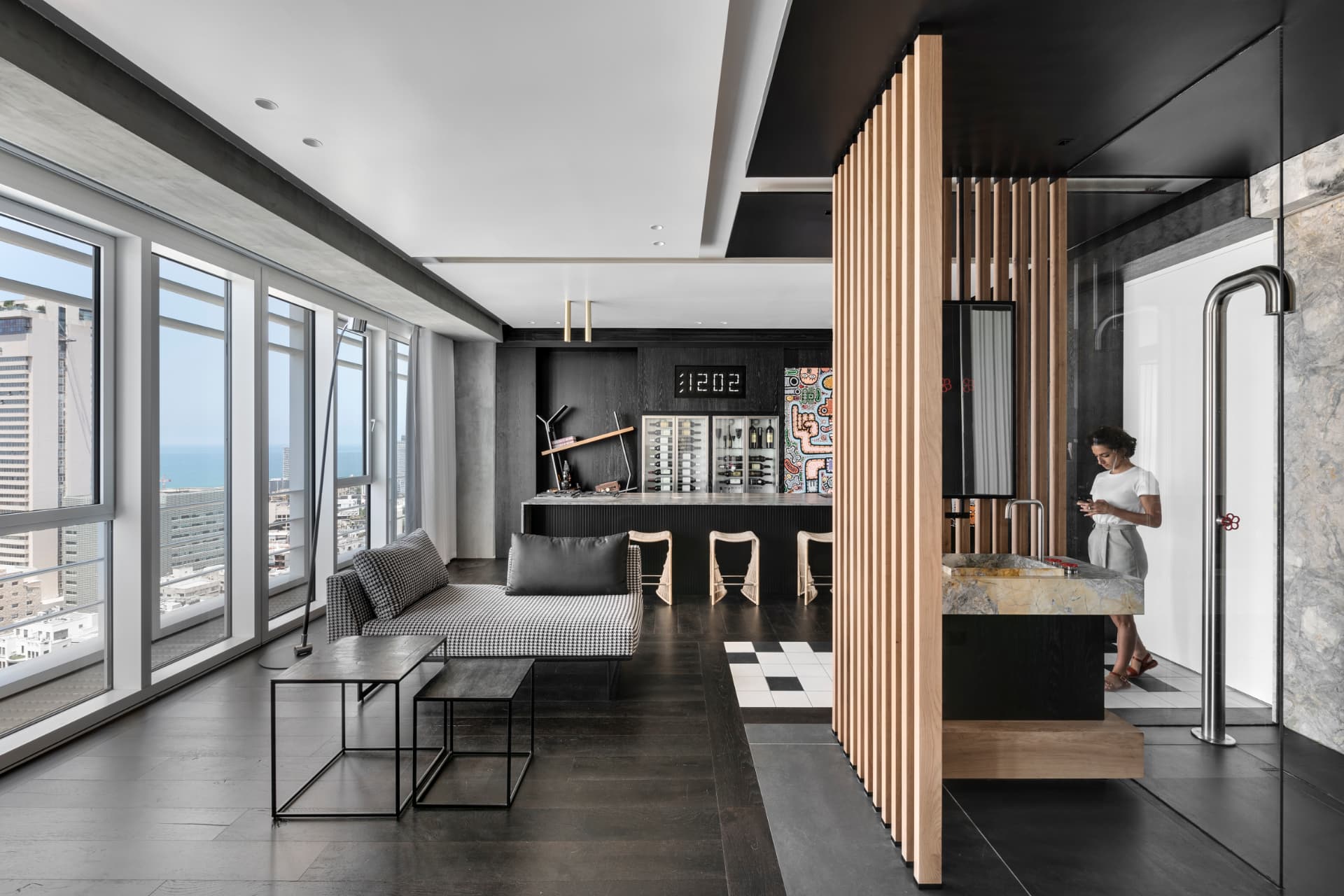
At Coco Atelier, XL APT is a good example of how much a small apartment can carry. The 60 m² flat in Tel Aviv was designed for a client who wanted a vacation home that would feel like a high-end hotel suite. The layout stays open, divided only by transitions of material that run from floor to ceiling, and custom millwork covers the walls, hiding storage behind layers of texture.
How to read an interior design portfolio
A portfolio tells you more than taste if you know where to look.
- Built work, not only ideas. Portfolios mix photographs and renders, and both have a place. What matters is whether the project was built: ask which of the spaces you are looking at were completed, and how closely the finished room matches what you see.
- Projects at your scale. A designer who has done large villas may approach a 55 m² flat very differently. Look for work of a similar size and budget.
- Close-up details. Look at where the stone meets the timber, how a cabinet door closes against a wall, how lighting is recessed. Details are where design quality is decided and where budgets are protected or lost.
- Range. A portfolio where every project looks the same may mean the designer has one answer. A portfolio with a clear sensibility but different solutions usually means they listened to each client.
- Press and recognition. Useful as a signal, not a substitute. Coco Atelier's XL APT was featured in Portfolio in 2022, and the studio's TER restaurant in Malga Costa, Italy, received an A' Design Award for Interior Space & Exhibition Design (2019–2020). Ask any designer you meet what they were responsible for in the work they show.
Questions to ask at the first meeting
A first meeting should feel like a working conversation. Bring your floor plan, a rough budget and a few photographs of spaces you like. Then ask:
- Which stages are included: concept, detailed drawings, supervision, procurement?
- How many design options or revision rounds are included, and what happens after that?
- Who will I deal with day to day?
- Do you work with your own contractors and craftspeople, or with mine?
- How often will you be on site during the works?
- How do you handle furniture and materials ordering, and are any supplier discounts passed on to me?
- What do you need from me, and by when, to keep the project on schedule?
- Can I see a project of a similar size, and speak to the client?
The answers matter, but so does the way they are given. You will make dozens of decisions together over months. Clear, unhurried answers now are a good sign of how the project will run.
How interior design fees are usually structured in Israel
There is no fixed tariff for interior design in Israel. Designers commonly charge in one of four ways: a fee per square metre, a fixed fee per stage, an hourly rate (common for consultations), or a percentage of the works budget. Each has trade-offs: a per-metre fee is easy to compare but says little about complexity, while a stage-based fee makes it clearer what you are paying for at each point.
Whatever the model, ask for it in writing, with the scope of each stage, the number of site visits and what counts as extra work. For a detailed look at what drives the number, read What does an interior designer cost in Israel?.
Be wary of a firm price quoted over the phone before anyone has seen your plan. A good designer will want to understand the apartment, the scope and your expectations first, and then put a proposal in writing.
Buying in Tel Aviv from abroad
Many Tel Aviv apartments belong to owners who live in New York, London or Paris for most of the year. If that is you, the designer's ability to run the project without you on site matters as much as their style. Ask how decisions are presented remotely, who checks the work on site, how photographs and progress reports reach you, and how payments to contractors and suppliers are approved.
Coral Mesika was raised in the United States, is based in Tel Aviv and works with clients in English and Hebrew. Remote projects run in both directions: HB HOUSE, a full-house renovation in Huntington Beach, California, was designed from Tel Aviv. On projects abroad, the studio works remotely with local contractors and visits the site at key stages. If you are planning from overseas, Hiring an interior designer from abroad goes through the practicalities in more detail.
Red flags worth noticing early
- No written scope. If stages, revisions and site visits are vague, disagreements later are almost certain.
- No built work. A new studio may not have much yet, but you should know whether the designer has seen a project through to completion.
- A finished design before a single question. Good design begins with how you live: who cooks, who works from home, what you own and want to keep.
- Pressure to decide fast. Lead times in Israel can be long for imported tiles, stone and furniture, but a good designer plans around that rather than rushing you.
- Unclear commissions. Ask directly whether the designer receives commissions from suppliers or contractors, and how that is handled.
None of these is a reason to walk away by itself. Together, they tell you how the months ahead might feel.
For a broader view of the work itself, from permits to living through the noise, see our guide to renovating an apartment in Tel Aviv.
Frequently asked questions
How much does an interior designer cost in Tel Aviv?
It depends on the size of the apartment, the scope of work and how much of the process the designer manages. Fees in Israel are usually set per square metre, per stage, hourly or as a percentage of the works. Ask for a written proposal that lists exactly what each stage includes before comparing numbers.
When should I hire an interior designer for a new apartment?
As early as possible, ideally before the developer's deadline for plan changes. At that stage moving a wall, a sink or an electrical point costs little or nothing. After handover, the same change means demolition and rebuilding.
Do I need an interior designer or an architect for my Tel Aviv apartment?
For most apartment renovations that do not touch the structure or the façade, an interior designer or interior architect leads the work. If you plan structural changes, an extension, a closed balcony or anything else that needs a building permit, you will also need a registered architect or engineer. The two often work together.
Can an interior designer in Tel Aviv manage the project if I live abroad?
Yes, many do, but the arrangement should be agreed in detail: how often the designer visits the site, how you approve decisions and payments, and how progress is reported. Make sure someone you trust is your eyes on site every week.
What should I prepare before meeting an interior designer?
A floor plan or measurements, a realistic budget range, your timeline, and a handful of photographs of rooms you like and rooms you do not. A short list of how you use the home, such as who cooks, who works from home and who stays over, is often more useful than a moodboard.
Start the conversation
If you own an apartment in Tel Aviv, or are about to, and want to talk through what it could become, contact the studio by WhatsApp or phone. Bring the floor plan and your questions. You can also see more of Coco Atelier's residential work on the projects page or read about Coral on the studio page.