Journal9 min read
Hiring an interior designer from abroad: how it works
How remote interior design works across borders: the brief, the survey, drawings, sourcing, local contractors and site visits, explained step by step.
By Coral Mesika — Interior designer, Coco Atelier
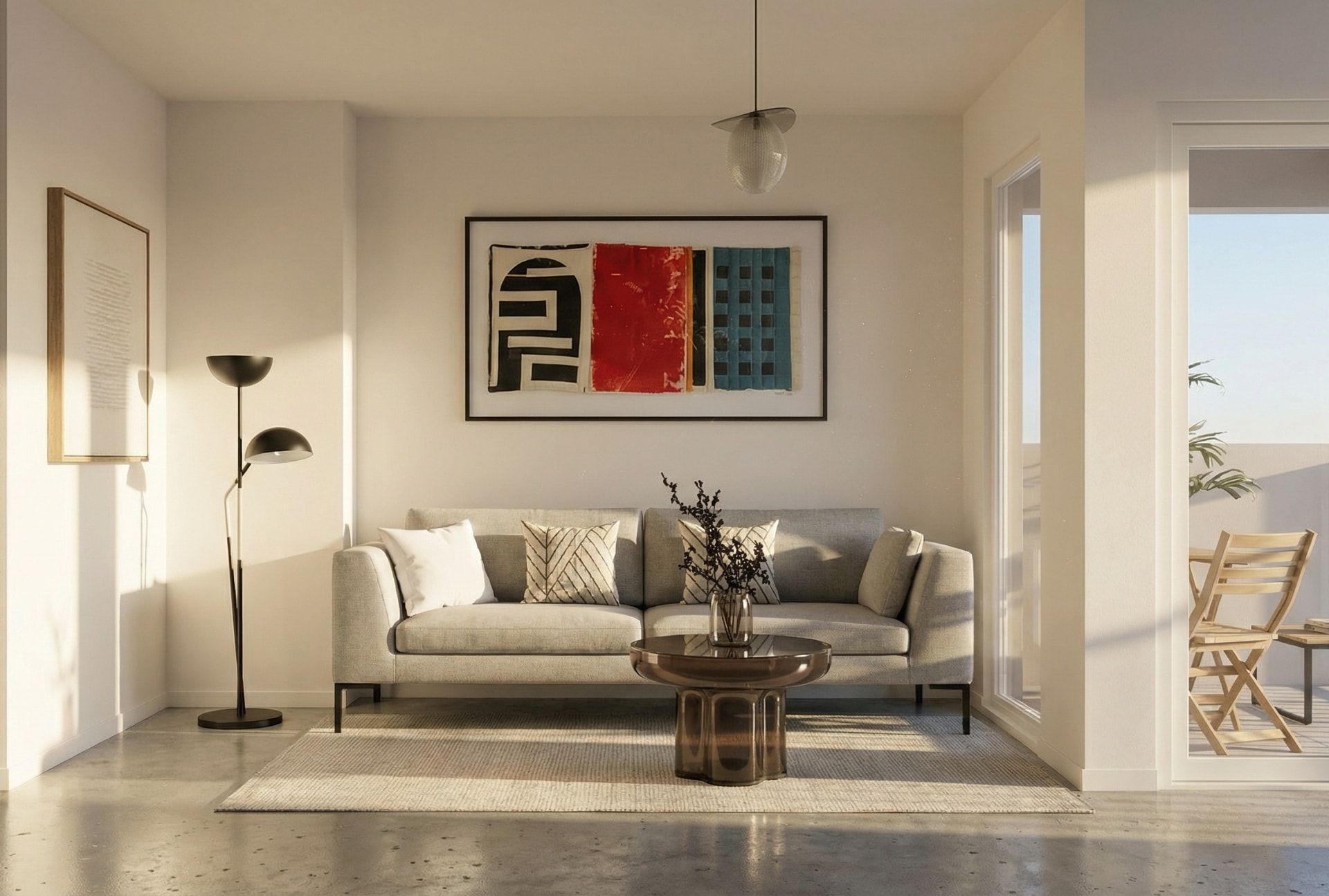
A remote interior designer works with you, and with a team on the ground, through a measured survey, video calls, detailed drawings and photographed decisions, so you do not need to be in the same city, or even the same time zone, as your home. It works well when the drawings are precise enough for a local contractor to build from without guesswork, and when someone you trust can stand on site at the moments that matter. The method is the same for a New Yorker with an apartment in Tel Aviv and for an Israeli family renovating a house in Greece.
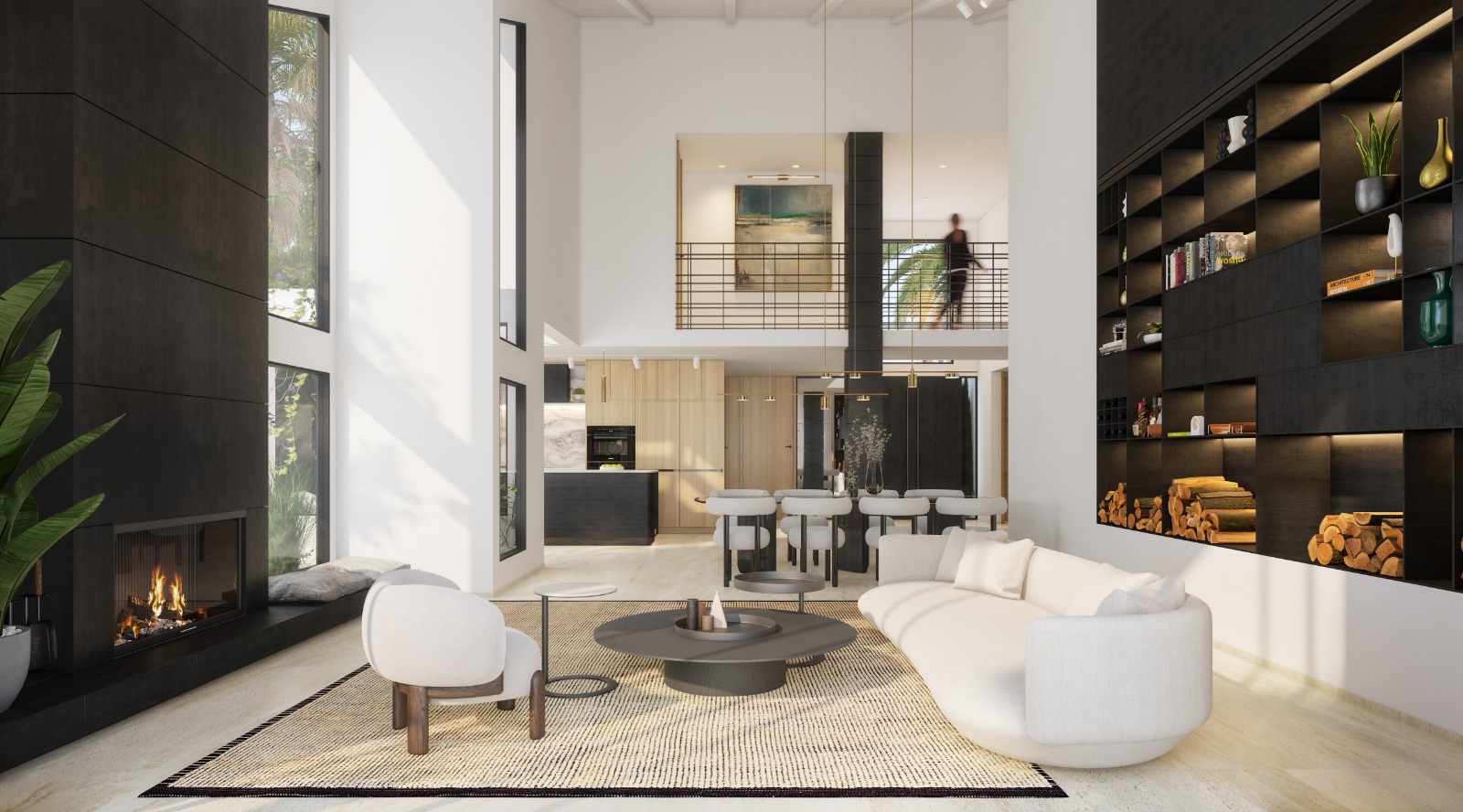
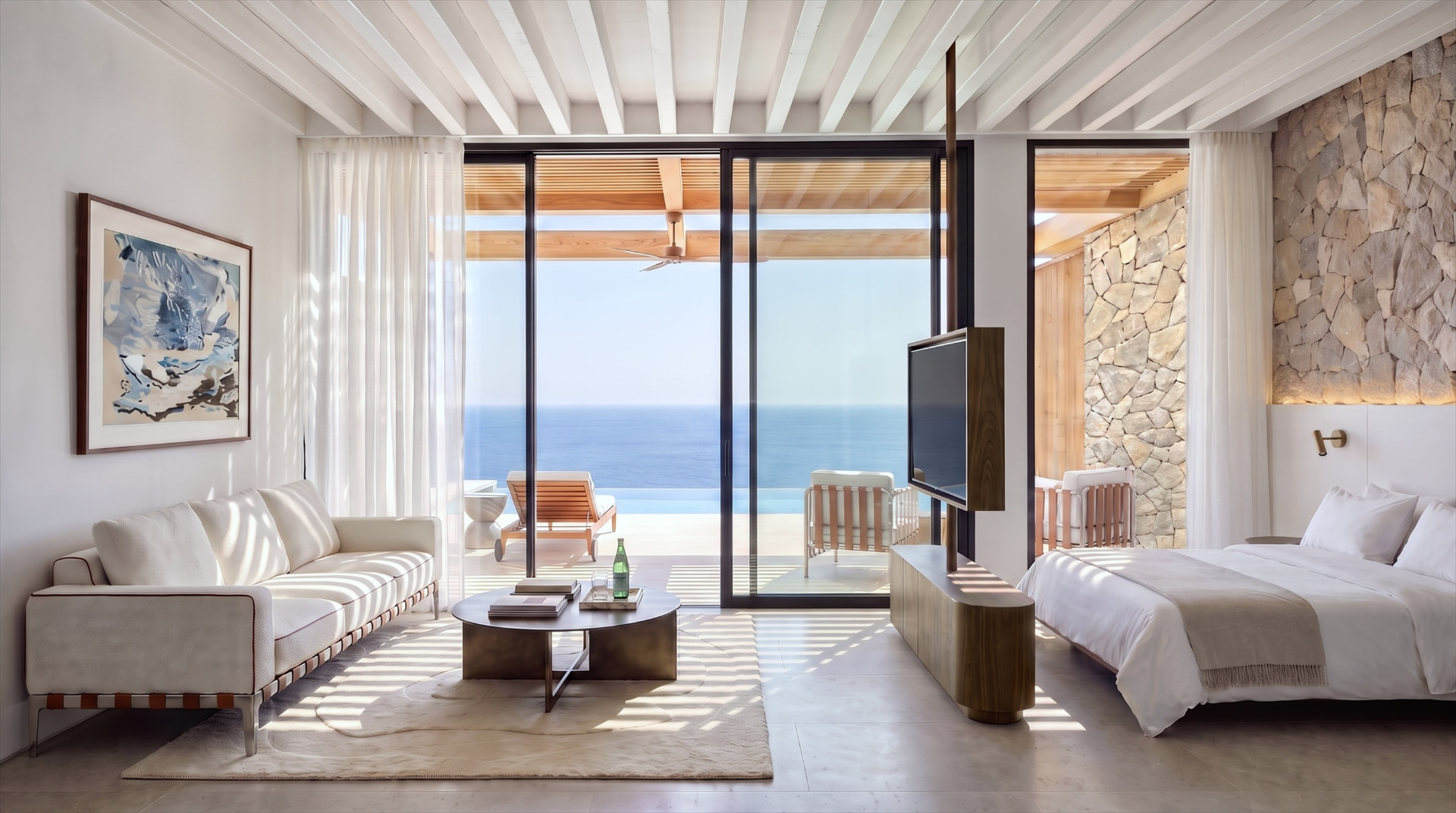
Coco Atelier is the interior design studio of Coral Mesika, based in Tel Aviv and working internationally. Our projects include eight sea-facing suites on Crete, student apartments in Thessaloniki, a two-storey house on the water in Huntington Beach, California, designed from Tel Aviv, a hotel in a historic villa in Turin and a restaurant at Malga Costa in the Italian Alps. This guide explains how an international interior design project actually runs, and what to ask before you hire someone to design a home you cannot visit every week.
Can an interior designer really work remotely?
Yes, for most of the work. The design itself (the layout, the material palette, the lighting, the joinery, the furniture) is done at a desk, in drawings and 3D views, wherever the designer sits. What cannot be done remotely is measuring the space, checking what is behind the walls, and seeing finished work in real light. A remote project is built around those three gaps.
There are broadly two kinds of international project:
- You are abroad, the property is local to the designer. For example, you live in London or Los Angeles and are renovating an apartment in Tel Aviv. The designer can visit the site regularly; the remote part is your side of the relationship.
- The designer is abroad, the property is somewhere else. For example, a studio in Tel Aviv designing a house in California or suites in Greece. Here the designer works with a local contractor, and often a local architect or project manager, and visits at key stages.
Many projects are a mix of both.
How a remote interior design project works, stage by stage
Every studio has its own sequence. This is the general shape of a well-run international project.
1. The brief, by video call
The first conversations happen on video. You talk about how you live, who uses the home, what you love and what irritates you about the current space, your budget and your timing. If the property is a holiday home or a rental, the brief also covers how often it will be used and by whom.
2. A measured survey and existing drawings
Nothing reliable can be designed from an estate agent's floor plan. The space needs to be measured accurately: walls, ceiling heights, window and door positions, beams, columns, the position of drains, risers and the electrical board. This is done either by the designer on a visit or by a local surveyor, architect or contractor, backed up by a full photo and video walk-through. Ask your designer early who will carry out the survey and who checks it, and ask for the original building drawings too, if they exist.
3. Concept and layout
The designer presents a layout and a design concept: plans, a material and colour direction, reference images and usually 3D views of the main spaces. On a remote project these presentations happen on screen, so 3D views matter more than usual. They let you stand in a room you have not yet seen. Ask what you will receive at this stage, and in what format, before you sign.
4. Detailed drawings a contractor can build from
This is the stage that makes or breaks a remote project. Construction drawings, electrical and lighting plans, joinery drawings, tile layouts and finishes schedules need to answer the contractor's questions before they are asked. When the designer cannot drop by the site the next morning, an ambiguous drawing becomes a decision made by someone else.
5. Sourcing materials and furniture
Sourcing across borders is where experience saves real money. Lighting, loose furniture and fabric travel well; stone, tiles, sanitaryware and kitchen carcasses are usually better bought locally, because of weight, breakage, lead times and the need for local service. Electrical standards also differ: a light fitting specified for Israel or Europe at 230V will not simply plug in to a 120V American home. A designer working internationally should know which suppliers ship, which have local agents, and what import duties and delivery times look like.
6. Working with a local contractor
The contractor, not the designer, builds the home. On an international project you either hire a contractor the designer recommends or has worked with, or one you find locally whom the designer then briefs. Either way, the contractor prices from the designer's drawings, so quotes are comparable and fewer items are left as "to be decided". On our projects in Greece, Italy and California, Coco Atelier works remotely with local contractors.
7. Site supervision and decisions by photo and video
During construction, decisions are made through photographs, short videos and live video calls from site: checking a stone slab before it is cut, the height of a niche, the colour of a plaster sample in daylight. Regular site reports, with dated photos, keep you and the designer in step. Physical site visits are usually concentrated at the moments when mistakes are hardest to undo: before walls are closed, when joinery is installed, and at handover. On our projects abroad, the studio visits the site at key stages like these; agree with any designer which visits are planned and how site updates will reach you.
Time zones, communication and decisions
Time zones sound like the hardest part. In practice they can work in your favour. Tel Aviv is usually seven hours ahead of New York and ten ahead of Los Angeles, shares a clock with Athens for most of the year, and sits one hour ahead of Turin and the rest of Central Europe. A question sent from California in the evening can be answered in Israel the next morning, before the Californian site opens.
Language matters too: Coral works with clients in English and Hebrew, which helps when the owner, the contractor and the family on site do not share a first language. What matters most is a clear rhythm:
| What | Why it helps |
|---|---|
| A fixed weekly call | Decisions do not pile up between visits |
| One shared folder for drawings and photos | Everyone works from the latest version |
| Written confirmation of every decision | No one relies on memory across three countries |
| A single decision-maker on the client side | The contractor gets one answer, not two |
| A list of what must be approved in person | Samples, stone and paint are seen in real light |
Ask any designer you are considering how they handle each of these.
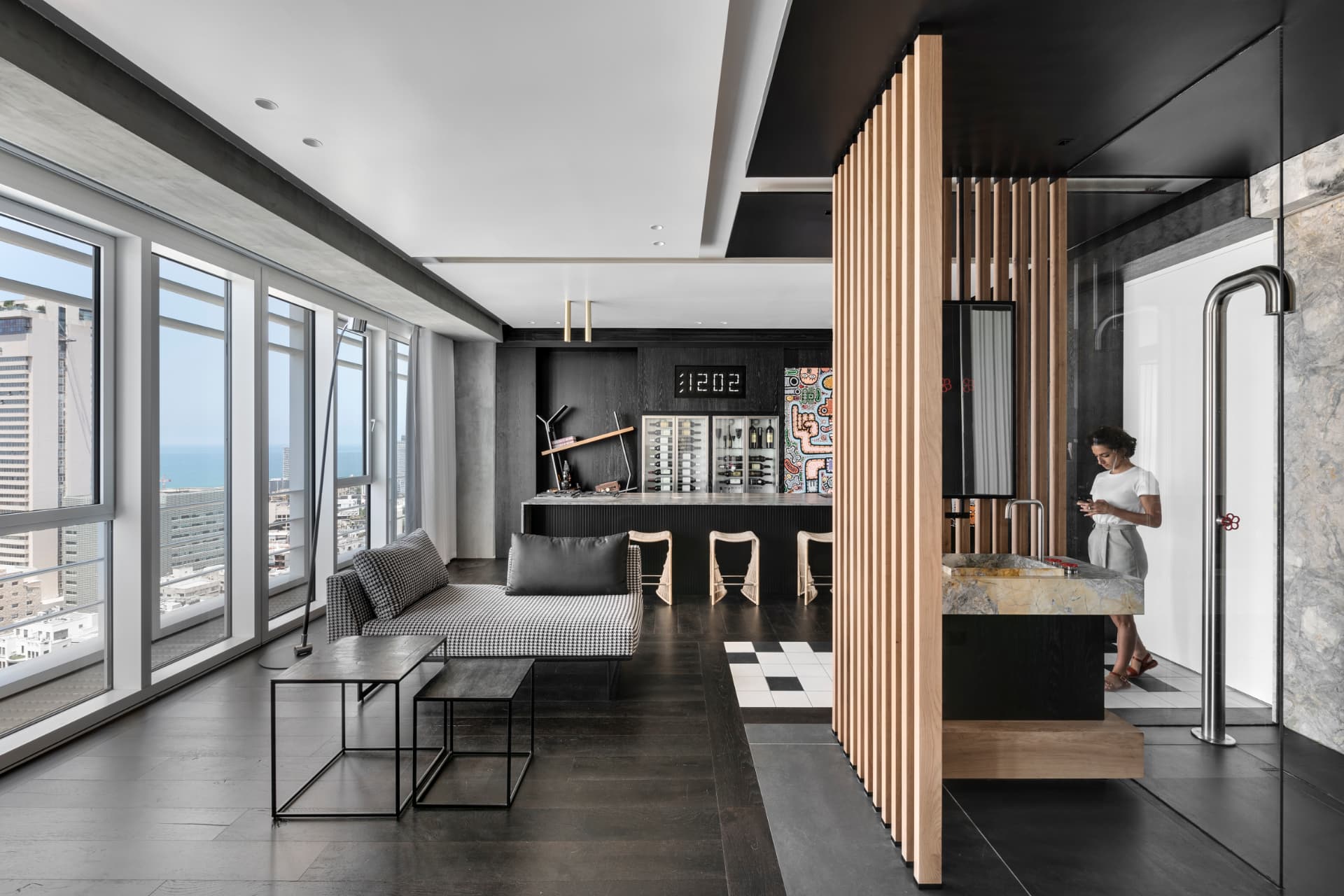
Renovating an apartment in Israel from abroad
If you live in the US or Europe and own an apartment in Tel Aviv, there are a few local realities to plan for. Building works in apartment blocks usually require notifying neighbours and, depending on the scope, a permit from the municipality; structural changes and changes to the facade need an engineer and sometimes the agreement of other owners. Most Israeli apartments built in recent decades include a mamad, a reinforced safe room, whose walls, door and window cannot be altered. Contractors' working hours are limited by local rules, and the Jewish holidays slow everything down for several weeks each autumn. The rules vary by building and municipality, so confirm what applies to your apartment with a local engineer or lawyer before you commit.
You will also need someone local with authority to sign, receive deliveries and give access, whether that is a family member, a property manager or the designer's team. Decide this before work begins, not when the first delivery arrives.
For a fuller picture, read our guide to renovating an apartment in Tel Aviv and our article on what an interior designer costs in Israel.
International projects from a Tel Aviv studio
Coral Mesika was raised in the United States and is based in Tel Aviv, and the studio's portfolio spans Israel, Greece, Italy and the United States. In Greece, our work includes CR SUITES, eight high-end suites with private pools on the coast of Crete, and three student apartment projects near the university district of Thessaloniki. In the US, HB HOUSE is a full renovation of a 1970s two-storey house on the water in Huntington Beach; we tell its story in A California beach house, designed from Tel Aviv. In Italy, HOA is a hotel in an 18th-century villa in Turin, and TER, a restaurant expansion at Malga Costa, received an A' Design Award and an honorary mention in YAC's Calamity Atelier competition.
If your property is in Greece, our article on renovating a holiday home in Greece covers that country in detail.
What to ask before hiring an international interior designer
- Have you worked in this country before? Ask to see the project, and ask what was hard about it.
- Who measures the space, and who supervises the site day to day?
- What exactly will I receive? Plans, 3D views, construction and joinery drawings, a finishes schedule, a furniture list with suppliers.
- How are site visits handled and charged? Travel is a real cost; agree it in advance.
- Who orders and pays for materials and furniture, and in which currency?
- How do we communicate, and how quickly do you reply?
Frequently asked questions
Can I hire an interior designer in Israel while living in the US?
Yes. The brief, presentations and most decisions happen on video calls, and drawings, samples and site photos are shared online. What you need locally is someone to give access and receive deliveries, and a designer who visits the site at the key stages of construction.
How does an international interior designer work with a local contractor?
The designer produces detailed drawings and specifications, the contractor prices and builds from them, and the two stay in contact throughout construction by photo, video and site visits. The more complete the drawings, the fewer decisions are improvised on site.
Is remote interior design cheaper than hiring a local designer?
Not necessarily. Design fees depend on the scope and complexity of the project rather than on distance, and site visits abroad add travel costs. The savings usually come from fewer mistakes, comparable contractor quotes and better sourcing, not from the fee itself.
Do I need to be there in person at any point?
It helps, but it is rarely essential. Many clients come once to see stone, tile and paint samples in real light, and again at handover. Everything else can be approved from photographs, video calls and drawings.
What is the difference between e-design and full remote design?
E-design usually means a layout, a moodboard and a shopping list that you carry out yourself. Full remote design includes construction drawings, coordination with the contractor and site supervision, so it suits renovations rather than refurnishing alone.
Planning a home from abroad
If you own, or are buying, a property in Israel, Greece, Italy or the US and live somewhere else, the most useful first step is a short conversation about the space, your timing and who will be on site. Send us a message on WhatsApp or call through the contact page, with a few photos and a floor plan if you have one, and Coral will tell you how a project like yours could run from wherever you are.